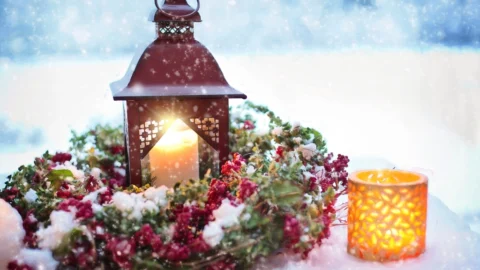
Quick answer: Advent 2026 begins on Sunday, November 29 and runs until Christmas Eve, Thursday, December 24. The four Sundays of Advent are November 29, December 6, December 13 and December 20 in Western churches. This guide explains what each candle means, how to keep Advent at home, and gives you 47 messages and a 24-day kindness calendar.
Advent is the season of waiting and preparing for Christmas. Many families mark it with a wreath, a calendar or a daily reading. This guide gives you the dates, a simple explanation of the four candles, ideas for keeping the season at home or at church, and 47 short messages you can share with friends, family or a church group.
Whether you grew up lighting an Advent wreath every Sunday or you are curious about the tradition for the first time, you can keep this season in a way that fits your household. A single candle, a short reading and a few quiet minutes are enough.
Key Takeaways
- Advent 2026 starts Sunday, November 29, just three days after Thanksgiving.
- There are four Sundays, so a wreath carries four candles, often three purple or blue and one pink.
- The third Sunday, December 13, is the one many churches mark with the pink candle.
- The season lasts 26 days in 2026, from November 29 to December 24.
- Advent is the start of the Western church year, which begins on the first Sunday of Advent.
- Eastern Orthodox churches observe a different Nativity Fast calendar.
What Is Advent?
The word Advent comes from the Latin adventus, meaning “coming” or “arrival.” In Western Christianity, it is the season of preparation before Christmas and the beginning of the church year. Christians use it to remember the birth of Jesus and to look ahead to his promised return, so the season carries a double sense of memory and hope.
Unlike the busy run of December parties and shopping, Advent invites a slower pace: lighting candles, reading short passages, praying and practising small acts of generosity. Many churches use blue or purple, colours of preparation and expectation, for their decorations and clothing during the season.
Advent 2026 Dates and Candle Themes
Advent always begins on the Sunday closest to November 30, which means the first Sunday can fall anywhere from November 27 to December 3. In 2026 it falls on November 29. Themes vary between churches and families. The most common set is hope, peace, joy and love.
- First Sunday, November 29: Hope (a purple or blue candle)
- Second Sunday, December 6: Peace (a purple or blue candle)
- Third Sunday, December 13: Joy (the pink or rose candle)
- Fourth Sunday, December 20: Love (a purple or blue candle)
- Christmas Eve, December 24: Many families light a white Christ candle on Christmas Eve or Christmas Day
Some traditions use other themes, such as the prophets, Bethlehem, the shepherds and the angels. Whatever your tradition, the candles share a simple idea: the light grows brighter as Christmas draws near.
The Advent Wreath: History and Meaning
The Advent wreath as we know it is usually traced to nineteenth-century Germany, where the Lutheran pastor Johann Hinrich Wichern used a wooden wheel with candles to help children count the days to Christmas. Over time, the wreath became a ring of evergreens with four candles, one for each Sunday.
Each part of the wreath carries a meaning. The circle has no beginning or end, which points to eternity. The evergreen branches stand for life that endures through winter. The candles stand for the light that grows brighter as the season advances.
How to Make a Simple Advent Wreath
- Gather an evergreen wreath form or a ring of fresh branches such as pine, fir or cedar.
- Place four candle holders on the ring, spaced evenly. Use three purple or blue candles and one pink.
- Add a fifth white candle in the centre if you wish to light a Christ candle on Christmas Eve.
- Set the wreath on a table you use every day, away from curtains and drafts.
- Light the first candle on November 29 and add one more each Sunday, always supervising the flames.
How to Keep Advent at Home
- Set up a wreath with four candles and light one more each Sunday.
- Use an Advent calendar from December 1 with a short reading, treat or act of kindness behind each door.
- Read a short passage or say a brief prayer each evening.
- Choose one act of giving each week, such as donating food or writing a card.
- Sing one carol or Advent hymn together each Sunday.
- Keep a simple “waiting” jar where family members drop notes of thanks.
A Simple Weekly Rhythm
Gather at the same time each Sunday. Light the candles for the week, read a short passage, share one thing you are hoping for, say a brief prayer or moment of quiet, and blow out the candles together. The whole thing takes about five minutes, which makes it realistic even in a busy December.
Suggested Advent Readings
These passages are commonly read during the season. You can find them in any Bible translation, and our Christmas Bible verses page has KJV text for many of them.
- Week 1, Hope: Isaiah 9:2 and Isaiah 11:1
- Week 2, Peace: Isaiah 9:6 and Luke 2:14
- Week 3, Joy: Luke 1:46-47 and Romans 15:13
- Week 4, Love: Luke 1:30-31 and John 3:16
- Christmas Eve: Luke 2:1-20
Advent Messages and Wishes
These 47 messages are grouped by week and audience, so you can send the right one at the right time. Each is short enough for a text, a card or a church bulletin.
Week 1: Hope (November 29)
- Wishing you a hope-filled start to Advent.
- Happy first Sunday of Advent. May hope light your week.
- May the first candle remind you that light is on its way.
- Sending you hope as we begin to prepare for Christmas.
- Light one candle, and let it be enough for today.
- May hope find you in every quiet moment this week.
Week 2: Peace (December 6)
- Happy second Sunday of Advent. May peace fill your week.
- May peace settle in your home this Advent.
- Wishing you a calm, prayerful Advent.
- May this season of waiting fill your heart with peace.
- Two candles are lit. May your week be gentle and unhurried.
- May you find a quiet minute of peace every single day.
Week 3: Joy (December 13)
- Happy third Sunday of Advent. May joy surprise you this week.
- Rejoice! The pink candle is lit and Christmas is near.
- May your heart be light as Christmas draws closer.
- Wishing you joy in the small things this week.
- Three candles glowing. Wishing you a week of laughter and light.
- May joy find you on the way to Christmas.
Week 4: Love (December 20)
- Happy fourth Sunday of Advent. May love fill your home.
- May love be the gift you give and receive this week.
- The waiting is nearly over. Wishing you a joyful week ahead.
- May every candle on the wreath bring you closer to those you love.
- Four candles shine. May your home be full of love.
- Love is near. Merry last week of Advent.
Christmas Eve and the Christ Candle
- The Christ candle is lit. Merry Christmas Eve!
- The waiting is over, and the light has come. Blessed Christmas Eve.
- May the white candle remind you that the light of Christmas has arrived.
- Advent ends tonight. May Christmas find you rested and glad.
For Families and Any Week of Advent
- May your Advent be slow, thoughtful and kind.
- May the weeks ahead be full of quiet moments and gentle joy.
- Wishing you a season of waiting that is full of wonder.
- To our family: may every day of Advent bring us closer together.
- Thank you for keeping Advent with us. Your faith and kindness make the season brighter.
- Little ones, count the days with us. Christmas is coming!
For Church and Community Groups
- Welcome to Advent. We are glad to wait and wonder together.
- Join us this Sunday as we light the next candle and sing together.
- May our church family be a place of light for everyone this Advent.
- Thank you for serving this season. Your kindness is part of the story.
- Come, let us prepare room in our hearts and homes.
Short Advent Captions
- Waiting with hope.
- One candle at a time.
- Advent has begun.
- Preparing my heart for Christmas.
- Counting down with candlelight.
- Slow down, Advent is here.
- Light in the waiting.
- Four Sundays, one wreath, a lot of hope.
A 24-Day Advent Kindness Calendar
Use this list behind the doors of an Advent calendar, or simply read one idea each morning from December 1 to December 24. Each is small, free or cheap, and easy to do in a normal day.
- Send a card to someone you have not spoken to in a while.
- Leave a generous tip or a thank-you note for someone who serves you.
- Donate a bag of food to a local food bank.
- Call a grandparent or an older neighbour.
- Pay a sincere compliment to three people.
- Light the Advent candle and say one thing you are hopeful about.
- Bake something and share it with a neighbour.
- Clear out toys or clothes you no longer use and donate them.
- Write down three things you are thankful for.
- Shovel, rake or tidy for a neighbour.
- Put your phone away for the whole evening meal.
- Send an encouraging message to a friend who is having a hard time.
- Pick up litter on your street or in a local park.
- Read a Christmas story aloud.
- Buy a gift for a local gift drive.
- Thank a teacher, nurse, driver or carer.
- Forgive something small, or apologise for something small.
- Invite someone who might be alone to a meal or a walk.
- Learn a verse or carol and share it with someone.
- Help someone with a job they have been putting off.
- Write a letter to your future self about this year.
- Set aside time for a quiet walk without headphones.
- Prepare a gift for someone anonymously.
- Light a candle on Christmas Eve and welcome Christmas.
Advent Calendars: A Short History
Advent calendars began in nineteenth-century Germany, where Protestant families marked the days of December with chalk lines on a door or by lighting a candle each day. Printed calendars with little doors appeared in the early twentieth century, and chocolate versions followed later. Today, calendars range from simple paper designs to ones filled with tea, toys, beauty products or small acts of kindness.
Because a calendar starts on December 1 rather than on the first Sunday of Advent, the two do not always match. In 2026, Advent begins on November 29, so you might start your wreath a couple of days before you open the first door.
Advent Around the World
- Germany and Austria: Advent wreaths, calendars and Christmas markets, with Saint Nicholas visiting on December 6.
- Scandinavia: Candle arches in windows and Saint Lucia processions on December 13, with singers wearing candle crowns.
- United Kingdom: Advent carol services, wreath-making and Advent calendars in nearly every home.
- Latin America and the Philippines: Novenas, Las Posadas and the dawn Masses that lead to Christmas.
- United States: Church wreath services, Christmas tree lightings and family traditions that often begin right after Thanksgiving.
Advent and the Orthodox Nativity Fast
Eastern Orthodox churches do not follow the Western Advent calendar. Instead they keep the Nativity Fast, a 40-day period of prayer and simpler eating before Christmas. Churches that follow the traditional Julian calendar begin the fast on what is November 28 in the Gregorian calendar and celebrate Christmas in January, while others use the revised calendar and celebrate on December 25. If you are writing to Orthodox friends, ask what their church observes before assuming dates.
Keeping Advent With Children
- Let children light the candle with a grown-up and blow it out at the end.
- Make a paper chain with one link to remove each day until Christmas.
- Act out the Christmas story with a simple nativity set, adding one figure each week.
- Collect “kindness coins” in a jar and donate the total to a charity at Christmas.
- Bake gingerbread together and deliver some to a neighbour.
- Draw a picture each Sunday of what hope, peace, joy and love look like.
Frequently Asked Questions
When does Advent start in 2026?
Advent 2026 starts on Sunday, November 29 in Western Christian churches.
How many Sundays are in Advent?
There are four Sundays of Advent. In 2026 they fall on November 29, December 6, December 13 and December 20.
Why is one Advent candle pink?
The pink or rose candle is lit on the third Sunday and marks a note of joy in the middle of a season of waiting. The other candles are usually purple or blue.
What does the word Advent mean?
Advent comes from the Latin word adventus, meaning coming or arrival. It refers to the coming of Christ at Christmas and, in Christian belief, his promised return.
How long does Advent last?
It lasts from the first Sunday of Advent until Christmas Eve. The length varies between 22 and 28 days, and in 2026 it is 26 days.
Which Advent candle do you light first?
On the first Sunday you light the first purple or blue candle. Each following Sunday you light the previous candles again and add one more, with the pink candle lit on the third Sunday.
Can I keep Advent if I do not attend church?
Yes. Many families keep Advent at home with a wreath, a calendar and a short daily reading or moment of quiet.
Related Guides
- Merry Christmas Wishes for Family 2026
- Christmas Tree Decorating Ideas
- Christmas Captions 2026
- Christmas Bible Verses 2026
- Christmas Eve 2026 Wishes
Related posts:
 Happy Boxing Day Wishes, Messages & Quotes
 Merry Christmas Poems for Family and Friends 2026: Rhymes and Verses
 99+ Merry Christmas Status for WhatsApp and Facebook Messages 2026
 Merry Christmas Images for WhatsApp DP and Profile Wallpapers 2026
 Simple Tips to Decorate a Christmas Tree: Christmas Decoration Ideas 2026
 Best Merry Christmas WhatsApp Status and Messages 2026
 99+ Best Merry Christmas Wishes for Holiday Greeting Cards 2026
 Christmas Eve 2026: 58 Wishes, Messages and Captions for December 24
 Christmas Bible Verses 2026: 30 Scriptures About the Birth of Jesus (KJV)
 Baby Shower Invitation Wording and Messages